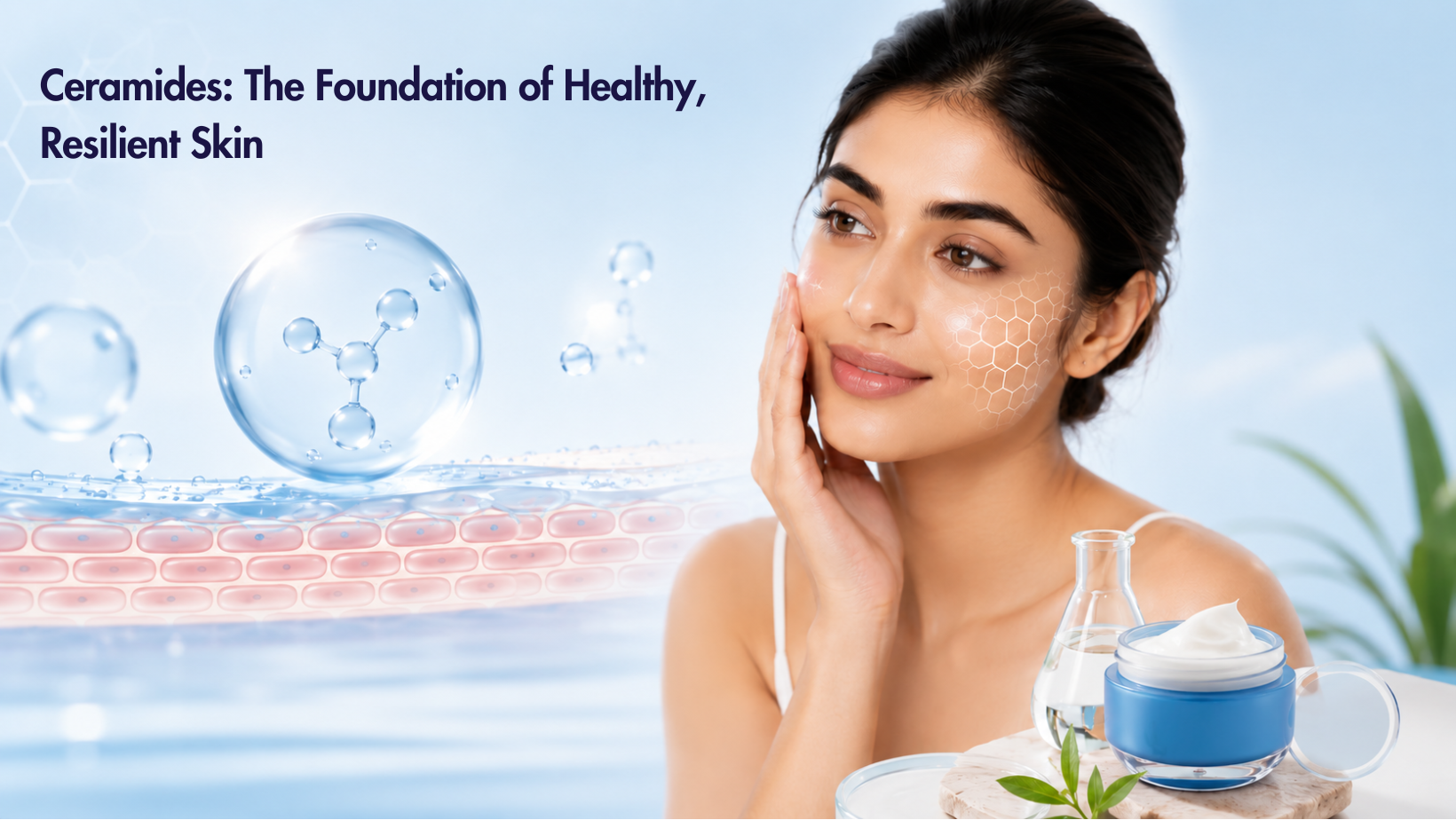
In today’s fast-paced world, personal care is no longer a luxury but an essential part of everyday living, and among the many trends that come and go, ceramides have remained a timeless cornerstone of healthy skin. With increasingly busy lifestyles, reduced water intake, rising pollution levels, and unpredictable weather conditions, our skin is constantly exposed to factors that weaken its natural barrier and lead to moisture loss. Ceramides, naturally occurring lipids that make up nearly half of the skin’s outer layer; play a crucial role in maintaining this barrier by acting like a binding “cement” that holds skin cells together. When depleted due to sun exposure, harsh skincare products, or environmental stress, the skin becomes prone to dryness, irritation, and premature aging. Incorporating a ceramide-focused routine helps restore this balance by strengthening the barrier, locking in hydration, and improving overall skin resilience. Scientifically, ceramides belong to the sphingolipid family and are composed of a fatty acid linked to a sphingoid base, based on the form of sphingosine and the fatty acid that binds it, there are 12 types of ceramides, named ceramide 1 to 12. Ceramides form an amphiphilic structure that allows them to organize into dense, protective layers within the skin. These layers reduce water loss and shield against external aggressors, while also playing a role in cellular signalling and skin renewal. Unlike short-term skincare solutions, ceramides work at a foundational level; supporting long-term health rather than instant results. Their compatibility with all skin types, including sensitive and acne-prone skin, makes them a versatile and indispensable ingredient. Widely regarded as safe, non-irritating, and skin-identical, ceramides offer a scientifically backed approach to maintaining a strong, hydrated, and youthful-looking skin barrier, making them a vital addition to any modern skincare routine.
